
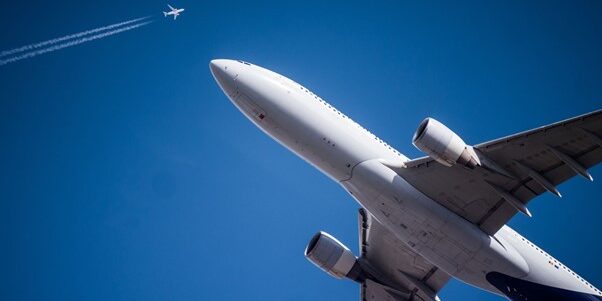
The aerospace industry is one of the most modern and strategic industries in the world. However, it is undergoing a period of significant change, driven by environmental pressure, technological progress, and alterations in the geopolitical landscape.
In this article, we examine the most important challenges and opportunities that will define the direction of the aerospace sector in the coming years:
1. Sustainability and Emissions Reduction
One of the greatest challenges for aviation and space exploration is reducing their environmental impact. Developing hybrid and electric propulsion systems, optimizing aerodynamics, and transitioning to Sustainable Aviation Fuels (SAF) has moved beyond a goal and become an urgency.
The challenge lies in balancing profitability with sustainability. These technologies still have high costs and require, in addition to new airport infrastructures, more stringent international regulations.
2. Digitalization and Automation
Digitalization and efficiency go hand in hand today. Technologies such as Artificial Intelligence (AI) for predictive maintenance, Machine Learning (ML) for route optimization, and Big Data applied to air traffic are transforming every link of the value chain.
However, their implementation poses significant challenges: cybersecurity and integration with traditional systems are critical to ensure a safe and effective transition.
3. Global Competition and Geopolitical Changes
Global competition is being intensified by the innovative proposals and aggressive strategies brought about by the emergence of new players. Adapting to this new scenario involves diversifying supply chains, strengthening strategic alliances, and accelerating innovation in products and processes.
In this context, business agility becomes not only a competitive advantage but also an essential condition for any company in the sector.
4. Certification of Innovations
The certification of new technologies such as eVTOLs (electric vertical takeoff and landing vehicles) or hypersonic systems represents a complex and costly challenge. It requires effort to conduct and obtain exhaustive tests, rigorous processes, and accurate data.
The development of more agile and secure regulatory frameworks will be key to allowing these innovations to pave the way for new forms of mobility and space exploration.
5. Investment and Competitiveness
Constant investment in R&D&i (Research, Development, and innovation), the improvement of supply chains, and the adoption of more efficient business models are key and ever-present elements for maintaining competitiveness and responding to market demands.
In conclusion, the aerospace industry is always in constant transformation. Technological innovation, sustainability, competitiveness, and human talent are the fundamental pillars in this sector. At Saspi, we have leading clients in the sector who are able to adapt quickly to these challenges that set the pace for the future of aviation and space exploration.
At Saspi, we offer advanced solutions in the manufacture of screws and fasteners for aircraft construction in the aerospace sector. Contact our team of experts to find out more.