At Saspi, we have been designing and manufacturing high-precision machinery for the fastener industry for over 60 years, with the ultimate goal of offering every customer the solution that best fits their production needs.
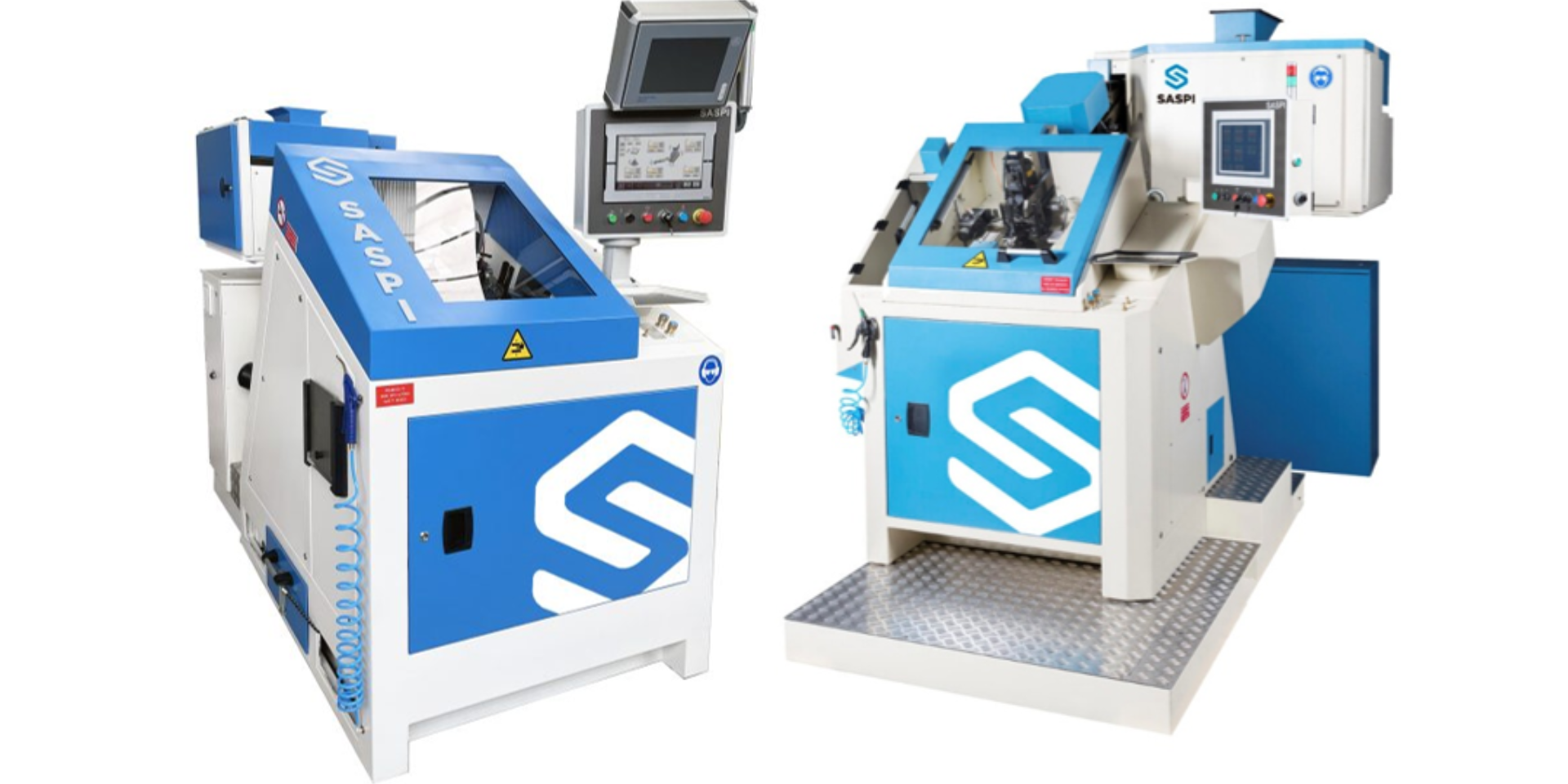
Within our range of automatic secondary operation machines, two of the most in-demand models are the MPA CL and the MPA SD. While both share the signature quality and reliability that define our machinery, each excels in different areas. In this blog post, we break down which one best suits your specific requirements.
What They Have in Common
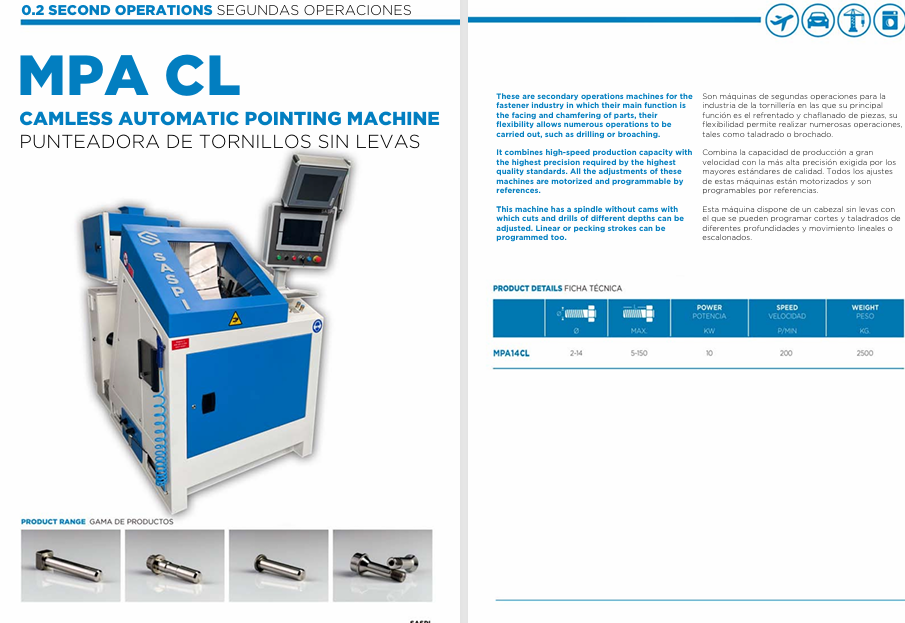
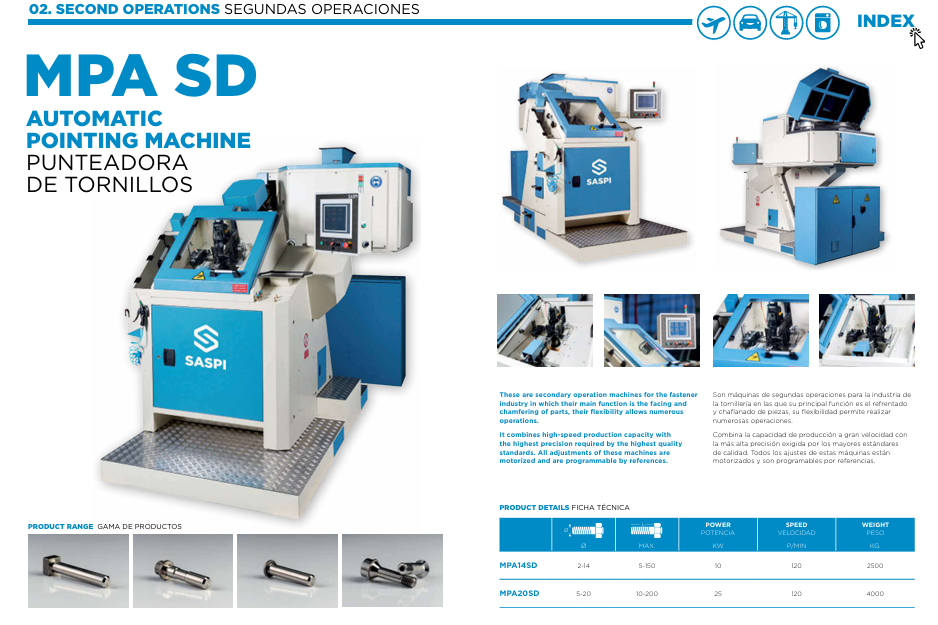
Both are secondary operation machines tailored for the fastener industry, primarily designed for facing and chamfering parts although they can also perform drilling and broaching operations.
Both models stand out for combining high production speeds with the strict precision demanded by the highest quality standards. Additionally, both feature motorized adjustments that are programmable by part numbers, allowing you to save configurations and switch between them with ease. Their versatility also enables them to perform numerous complex operations beyond the standard basics.
MPA CL: Calmless technology
The defining feature of the MPA CL is that it operates entirely without cams. In conventional machinery, movements are driven by mechanical cams, meaning that changing formats requires physical intervention on the hardware
By eliminating cams and replacing them with programmable, motorized controls, the MPA CL achieves unmatched flexibility and rapid format changeovers. This machine is specifically designed for production lines handling a wide variety of part numbers and frequent setups, where saving time during each adjustment makes all the difference.
MPA SD: Precision and Robustness for Demanding Operations
The MPA SD places its emphasis on precision and structural strength. Driven by a mechanical cam system for the cutting operation, this machine is engineered specifically to operate under the most demanding conditions. It is the ideal choice for processing high-hardness materials and sustaining high production volumes without losing a fraction of accuracy.
When the absolute priority is wear resistance, micrometer-level repeatability, and constant speed during long production runs, the MPA SD is the technology that sets the standard.
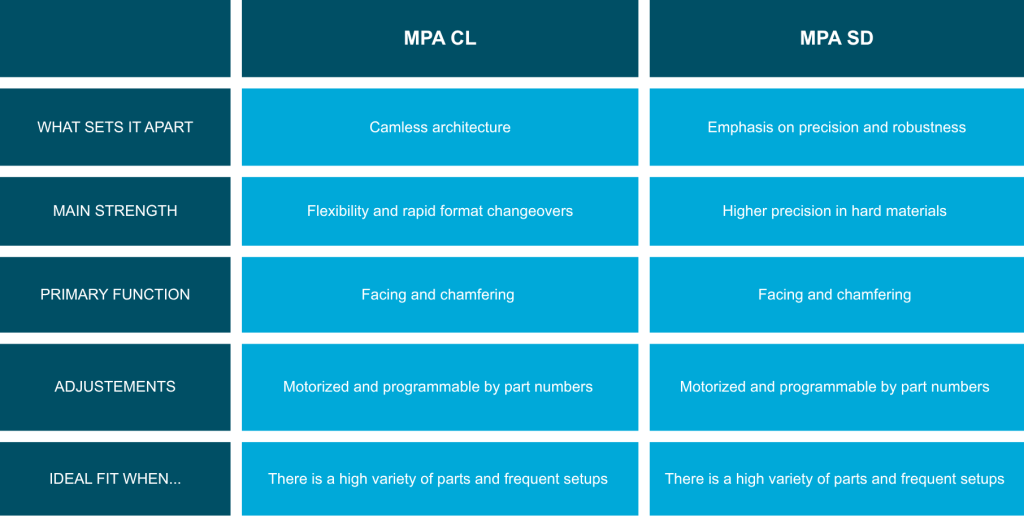
Quick Comparison
This summary highlights the key features of each model. For complete technical details (dimensions, speeds, and operations), please refer to the technical specifications for each machine.
So, which one should I choose?
As a simple rule of thumb: if your production involves a wide variety of parts and frequent format changes, the flexibility of the MPA CL will definitely pay off.
On the other hand, if you are looking for maximum precision and high production volumes, the MPA SD is your best fit.
If you are still unsure, the easiest way forward is to tell us about the specific parts you manufacture. Based on that, we will recommend the solution that best adapts to your business.
We are here to help you decide
If you want to fine-tune the choice for your plant, tell us the details of your project through our contact form, and we will advise you without any obligation. You can also consult the technical datasheet for each machine on its respective product page to review all their specifications.